

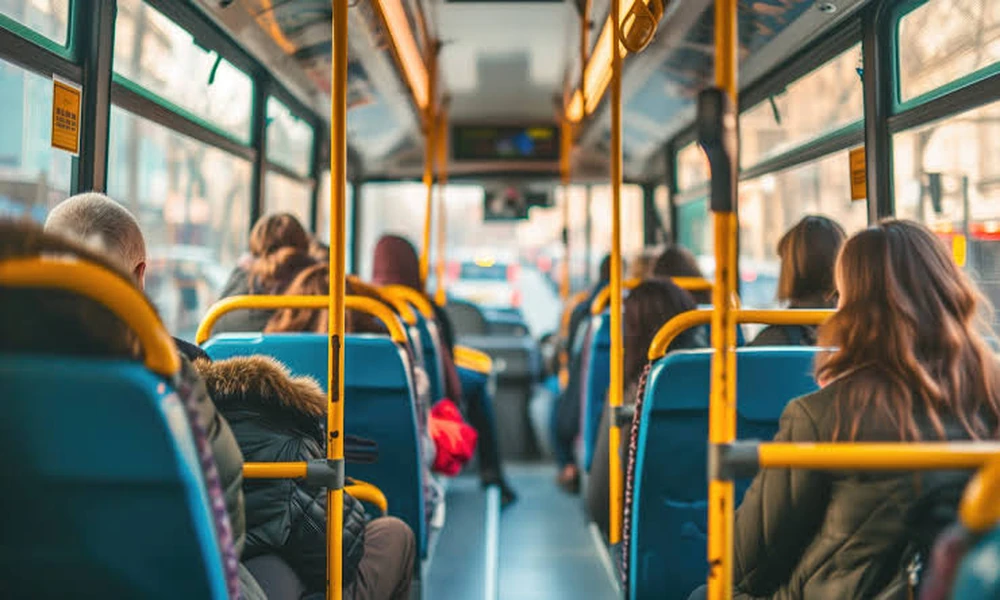
When we talk about road safety, the conversation usually centres on drivers. Speed limits, mobile phones, drink driving and seatbelts get most of the headlines. Bus passengers rarely feature, yet millions of people across the UK rely on buses every day to get to work, school, hospital appointments and the shops.
For most of them, the journey is uneventful. But buses come with a set of risks that are easy to overlook, and when something does go wrong, the people affected are often left unsure where they stand.
A different kind of journey
Travelling by bus isn’t like travelling by car. Passengers rarely wear seatbelts, many stand for part or all of the journey, and people are constantly getting on and off while the vehicle is in service. That means a bus doesn’t need to be involved in a serious crash for someone to get hurt.
A sharp brake to avoid a cyclist, a bus pulling away before an older passenger has found a seat, or a step that’s further from the kerb than it should be can all lead to a fall. A loose handrail or a wet floor can do the same. For someone who is elderly, pregnant, carrying shopping or travelling with young children, even a minor jolt can have serious consequences.
It isn’t only passengers, either. Pedestrians near bus stops and crossings, cyclists sharing narrow city streets and other motorists can all be affected when a large vehicle is involved in a collision.
Who carries the responsibility?
Bus operators and their drivers have a duty to take reasonable care for the people on board and those around them. In practice, that means driving with passengers in mind, giving people time to settle or step off before moving, and making sure vehicles are properly maintained.
Most drivers take that responsibility seriously, often in difficult conditions, with tight timetables and busy roads. But when standards slip, the consequences can be significant. And responsibility doesn’t always rest with the bus company. Another driver, a poorly maintained road or a faulty piece of equipment could all play a part.
The impact goes beyond the injury
The injuries themselves, such as whiplash, broken wrists, back pain and head injuries, are only part of the picture. Time off work, missed appointments, a loss of confidence on public transport and the stress of recovery can all affect day-to-day life. For people who don’t drive, feeling nervous about getting back on a bus can be particularly isolating.
Many people also aren’t sure whether what happened to them “counts”. There’s a common assumption that if you were standing up, weren’t holding a rail or didn’t report it straight away, you’ve somehow lost the right to raise it. That isn’t necessarily the case. Being partly at fault may reduce compensation, but it doesn’t automatically rule out a claim.
Knowing your options
In most cases, people have three years from the date of an accident to start a personal injury claim, though acting sooner makes it much easier to gather evidence such as CCTV footage and witness accounts. Most claims settle without going to court, and many specialist solicitors handle bus accident claims on a no win, no fee basis, so there’s nothing to pay upfront.
The bigger barrier is often uncertainty rather than cost. People don’t want to make a fuss, or they assume the process will be complicated and impersonal. Speaking to a solicitor doesn’t commit you to anything. Firms such as Truth Legal offer free initial advice, giving people the chance to talk things through with an experienced lawyer in plain English before deciding what to do.
A safer journey for everyone
Buses play a huge part in keeping communities connected, and the vast majority of journeys pass without incident. But when accidents do happen, passengers deserve to understand their rights just as clearly as drivers do. Raising awareness of those risks, and of the support available, helps make public transport safer and fairer for everyone who relies on it.
